Germinating the seeds
When to plant -- Plant your seeds when you receive them for best germination. Getting started -- You may either plant them all in a single container, or use several smaller containers and plant a few seeds in each. Either way, use containers with drainage holes For soil, use a well draining mix. A typical mix is 2 parts potting soil to 1 part
small perlite or coarse sand.
Next add water until everything is evenly moist (but not soggy). Until the seeds sprout, ensure that the soil surface always stay moist. A plastic dome or bag may be used to maintain near-100% humidity, but leave it open a crack to allow some fresh air in. You may need to drip a few drops of water over the seeds once or twice a day to keep them moist. The ideal temperature for germination is between 65 to 80 degrees F (18-27°C). A little cooler at night is ok. Avoid letting them get too warm. I recommend placing a minimum/maximum thermometer near the pots, especially if using a heating mat. Keep them in a bright spot
out of direct sun. An LED panel kept 4 inches (10 cm) away provides the right amount of
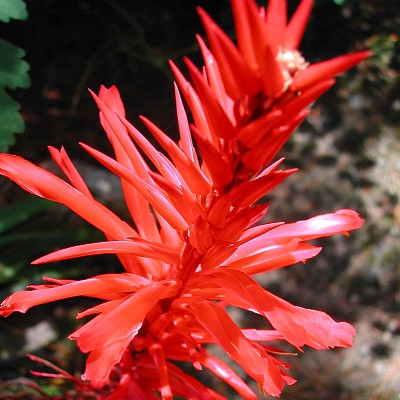
light (see: Growing Indoors with LED Lights). Fertilizing -- When they are 1 week old, give a small amount of diluted (1/8 strength) liquid fertilizer. Hydroponic fertilizer is ideal for seedlings, because it is easily absorbed and contains all essential nutrients. Repeat the feeding in 2 and 4 weeks. After that, the granular fertilizer in your soil mix should sustain them until it's time to repot them. Growing onward... Climate -- Pitcairnia ringens comes from about 3000 to 7000 feet elevation in Mexico, where temperatures are a bit cooler than the lowlands. I know it can handle temperatures in the mid-80s (30°C), but i have no information on how it will do in warmer conditions, so consider it experimental in warmer climates like Florida and Texas. In warmer climates, i would use an oversized pot to keep the roots cooler. The underground rhizomes can probably handle at least a few degrees of frost, although i recommend protecting the plant from all frost. Lighting -- The plant has flowered both in full sun and in full shade, but it seems to be happiest with about 50% sun. Some afternoon shade might be needed in warmer areas. Transplanting -- When your plants are about 2-3 months old, you may gently transfer them to larger pots, using a similar soil mix as mentioned earlier. Avoid strong sun for 2 weeks after repotting. At 1 year old, they will need a pot approximately 1 gallon (4 liter) in size, which should hold them for a year or more. You may separate any offsets if you wish, but this might delay flowering. They generally aren't
bothered by insects, but watch for any pests that can affect your other
plants. - Jeff Strange Wonderful Things
|
|||||||||